
Local growth & visibility
Healthcare Website, Booking & Local Patient Journeys
A high-trust healthcare service with demand in market, but a patient journey that leaked intent before booking.
PrimaryCare Indy · Primary care practice network · Indianapolis, IN

75%
Mobile-first
Local intent
Before, build, and operating change
A lightweight view of the problem, the intervention, and what changed after the system shipped.
Before / Problem
- Service pages did not map cleanly to patient intent, so visitors had to infer which care path fit their need
- Booking flow introduced unnecessary steps on mobile, creating friction in the highest-intent moments
Build / Fix
Patient-centered service architecture
Primary care services were reorganized around real patient decision paths so users could identify the right care type quickly. Information architecture shifted from internal categories to patient language and expected outcomes.
Online booking conversion rebuild
Booking UX was simplified for urgent and non-urgent pathways with fewer decision points on mobile. High-intent visitors could move from service understanding to scheduling with less ambiguity and fewer drop-off points.
After / Outcome
PrimaryCare Indy moved from a brochure-style site to a care journey where intent, trust, and booking work together. More qualified appointments run through online scheduling instead of manual phone follow-up alone.
Primary care demand is high intent and time sensitive. If the service architecture and booking path are unclear, patients defer, call competitors, or drop out. The commercial loss compounds quietly because each abandoned booking slot is unrecoverable revenue.
- →Service pages did not map cleanly to patient intent, so visitors had to infer which care path fit their need
- →Booking flow introduced unnecessary steps on mobile, creating friction in the highest-intent moments
- →Trust signaling was inconsistent between service detail, provider context, and next-step booking prompts
- →Local discovery surfaces and website conversion flow were not aligned as one patient-acquisition system
Patient-centered service architecture
Primary care services were reorganized around real patient decision paths so users could identify the right care type quickly. Information architecture shifted from internal categories to patient language and expected outcomes.
Online booking conversion rebuild
Booking UX was simplified for urgent and non-urgent pathways with fewer decision points on mobile. High-intent visitors could move from service understanding to scheduling with less ambiguity and fewer drop-off points.
Local visibility to booking alignment
Local-intent entry pages and on-site conversion blocks were aligned so discovery traffic landed on pages that matched search intent and offered immediate scheduling actions.
Trust and care proof before the booking ask
Provider credibility, care approach, and reassurance copy were placed in conversion-critical sections so patients felt confident before they scheduled, not after.
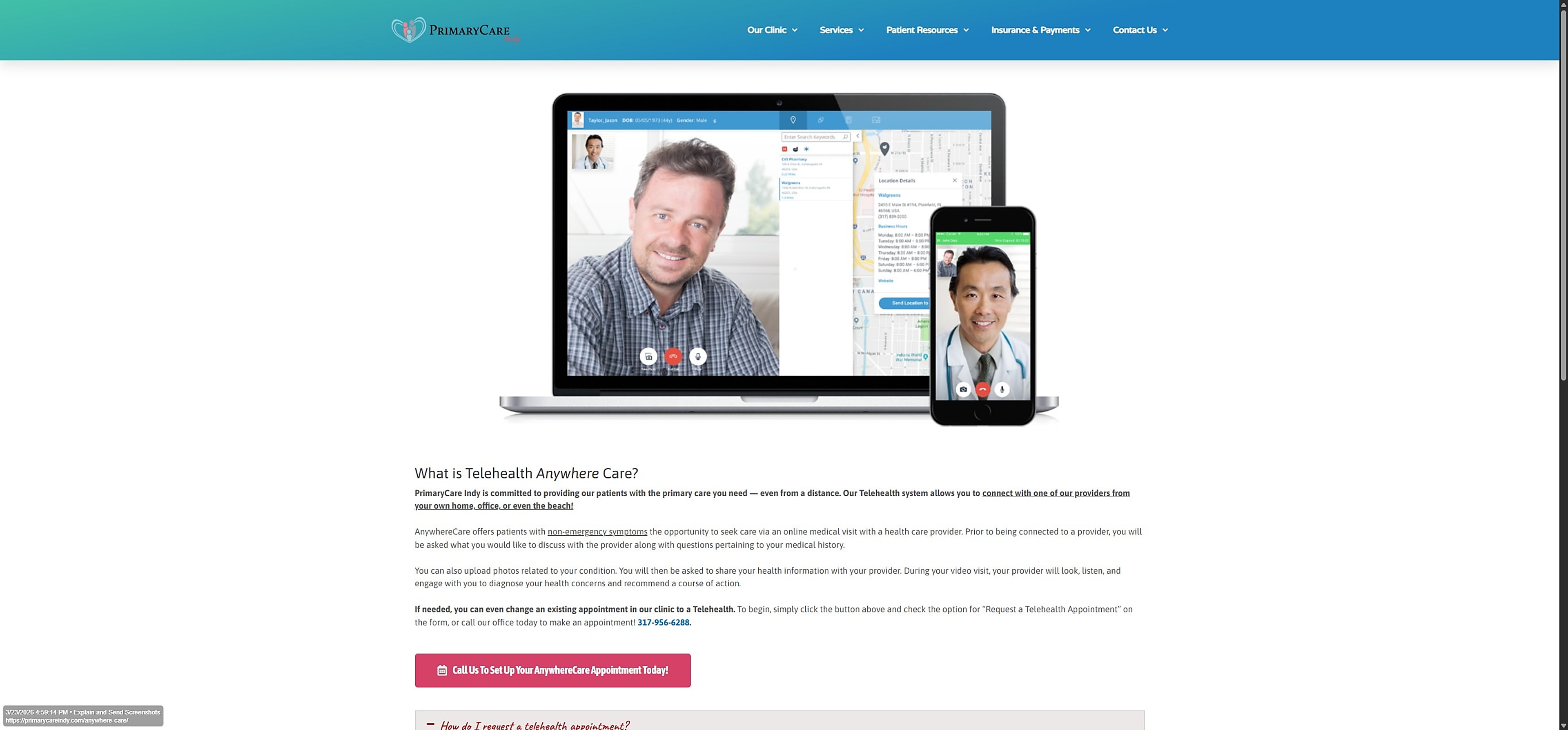
Service page and scheduling path
PrimaryCare Indy moved from a brochure-style site to a care journey where intent, trust, and booking work together. More qualified appointments run through online scheduling instead of manual phone follow-up alone.
SYSTEMS INVOLVED IN THE BUILD
The tools and system layers that made this project work — grouped by what they contributed.
Measurement, reporting, and source visibility that made the system readable.
WordPress carried the live care experience and service architecture so the team could ship and maintain patient-facing pages cleanly.
WordPress
Figma helped restructure patient journeys and clarify care-path decisions before the rebuild went live.
Figma
Local-intent search pages and discovery surfaces were aligned so the right care path matched the entry point.
Google
Booking friction was removed from the highest-intent patient path, especially on mobile.
- Patient-intent IA rebuild
- Mobile booking flow optimization
- Service-to-scheduling conversion path
- Trust and clinical proof on key pages
- Local intent landing alignment
What this project demonstrates
Each block names the capability first. Figures below are supporting context from the same engagement — not the headline.
Patient Booking Conversion System
Primary care booking flow was rebuilt around patient-intent pathways so online scheduling increased by removing mobile friction and decision ambiguity.
Referenced outcomes (same engagement)
- Increase in online bookings
- 75% — Increase in online bookings
Local Search Visibility Alignment
Local-intent entry pages and booking actions were aligned so search visibility and conversion flow reinforced each other instead of operating as separate efforts.
Referenced outcomes (same engagement)
- Increase in online bookings
- 75% — Increase in online bookings
Patient-Centered Service Architecture
Service information architecture was rebuilt around patient decisions so users could identify the right care path quickly and move to scheduling with confidence.
Referenced outcomes (same engagement)
- Increase in online bookings
- 75% — Increase in online bookings
Similar project shapes and delivery patterns — useful when you are comparing system fit, not client names.
Still deciding how similar this is to your situation?
Low trust: run the Growth System Audit. High trust: book a short diagnostic call once the shape is clear.